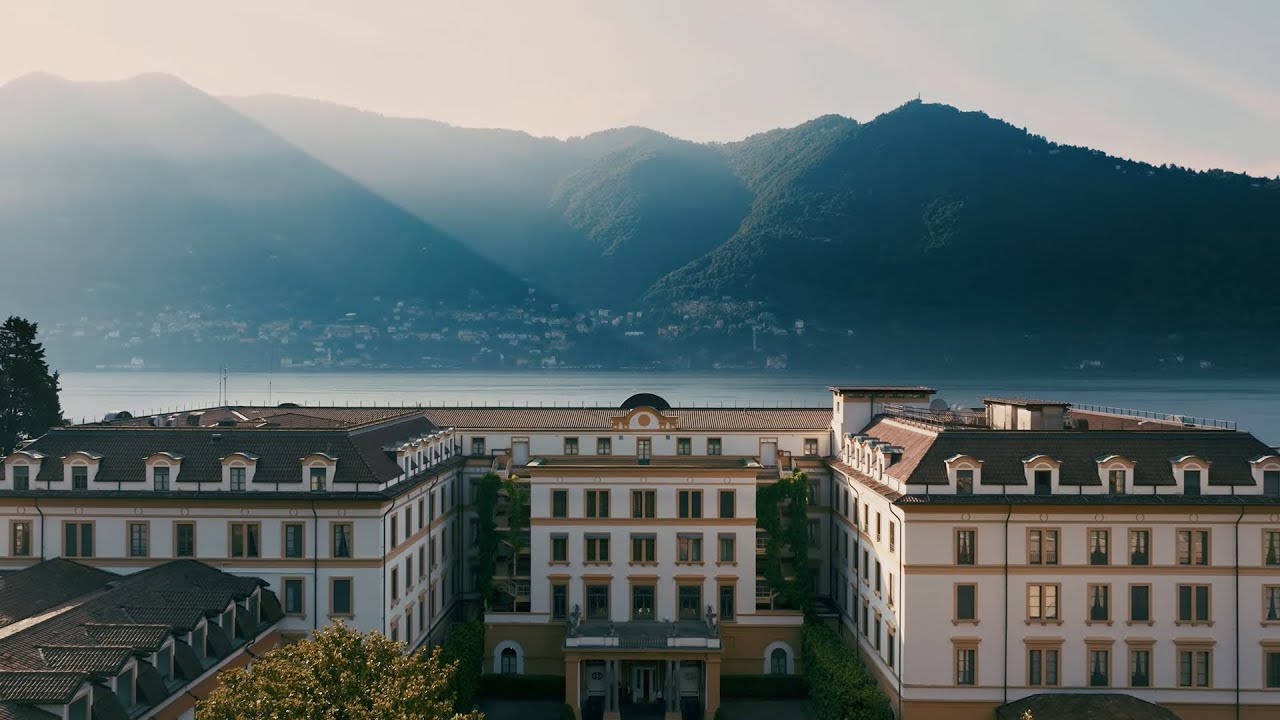
The approach began before the property could be seen. The boat left the quieter stretch of water and curved toward the point where the shoreline folds inward, the surface of the lake flattening as the light lowered into evening. From a distance, the estate did not present itself all at once. It held back, then revealed, then held again. You arrive by boat. This is not an affectation. It is the only honest way to see the property.
As the vessel moved closer, the façade settled into view with a kind of measured certainty. The geometry is not imposed on the landscape but aligned with it, each line holding its position without drawing attention. There is no attempt to impress at first glance. The effect arrives later, once the eye adjusts. For a period that extended well beyond a single season, the gates remained closed. The interruption altered the rhythm of the estate, shifting it from presence to absence. When they opened again, it was without announcement. The water carries you to that moment. There is no other way to arrive.
Few hotels in Europe have become destinations in their own right. Villa d’Este is one of them. Long before couples arrive for a wedding, they arrive carrying an idea of Lake Como itself, the cypress-lined approach, the floating gardens on the water, the view across the lake to the mountains beyond. Villa d’Este is not simply a hotel on the lake; for many, it is the image that defined Lake Como in the first place. That is the rare thing it offers a wedding. Most venues must be made to feel significant. This one arrives already meaning something, and the celebration is received into a reputation four centuries in the making rather than asked to invent one.
Villa d’Este is not simply a hotel on the lake. For many, it is the image that defined Lake Como in the first place.
Inside Villa d’Este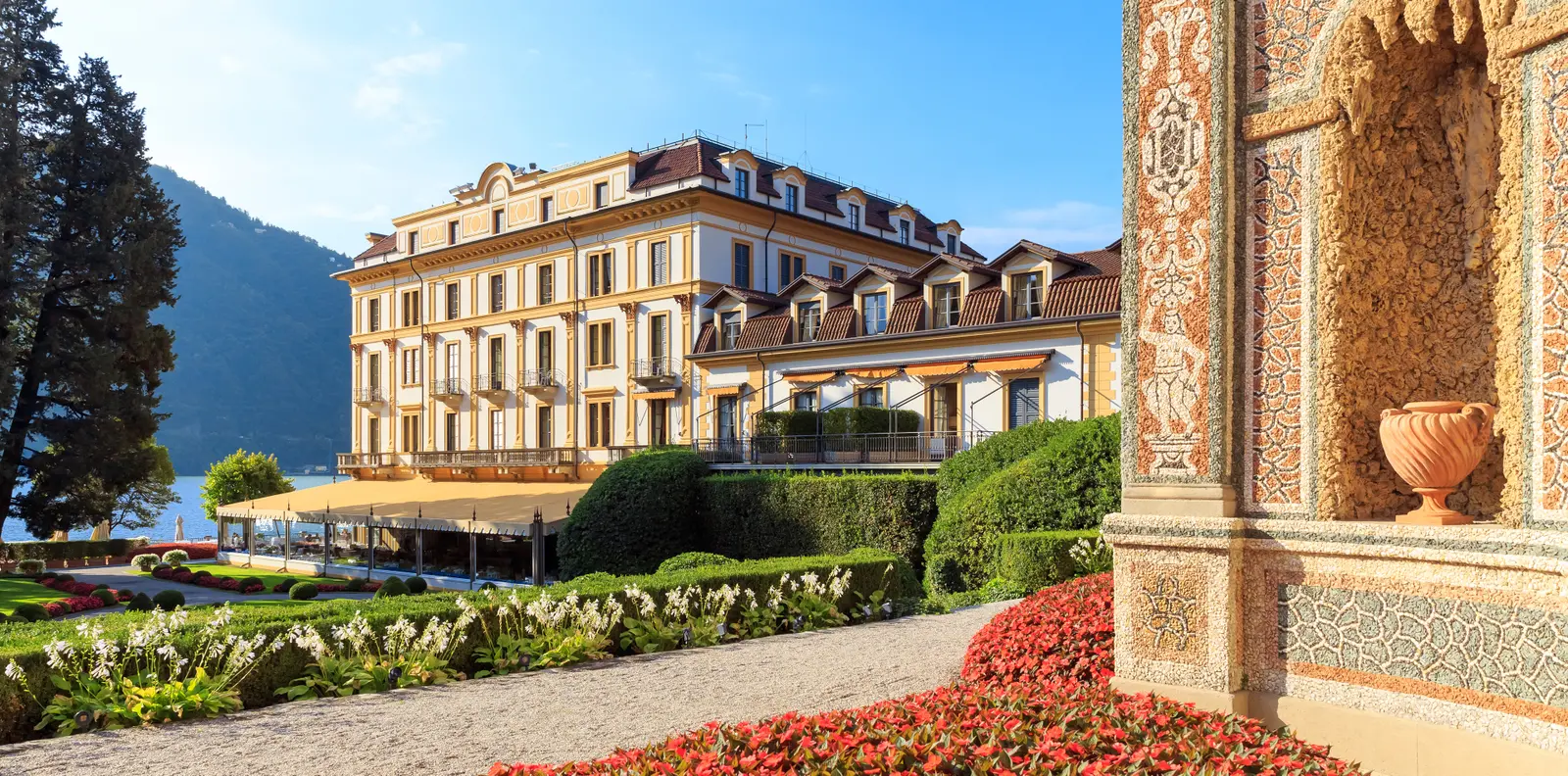
The Cardinal Building above the gardens and the Nymphaeum, Villa d’Este, Lake Como
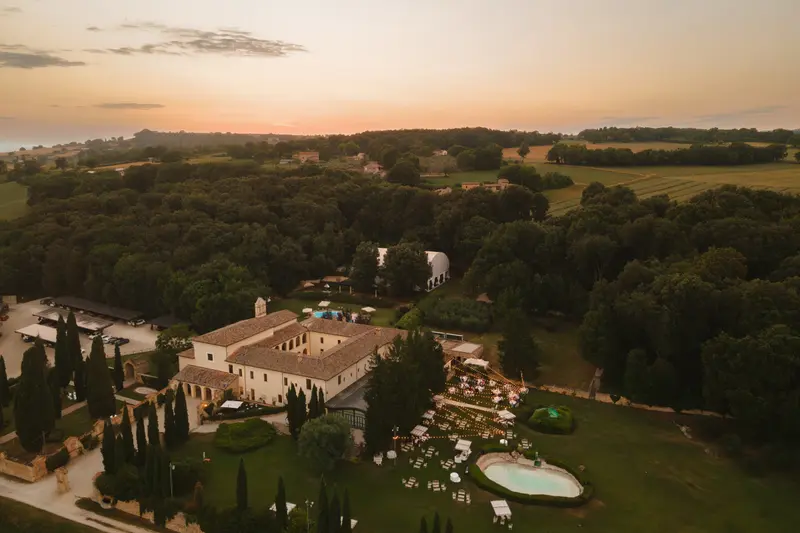
The estate sits along a stretch of Lake Como that does not rely on elevation for its authority. It occupies the shoreline with a sense of permanence, the water acting less as backdrop and more as extension. The perspective is horizontal, not vertical. The lake is always present, but never dominant. Across the water, the opposite bank holds its distance. The mountains frame rather than enclose, allowing the space to remain open. Light moves differently here. It does not fall sharply but settles, spreading across the surface and lifting again.
Villa d’Este: where wonder finds its home, the official film
From the grounds, the relationship between architecture and landscape becomes clearer. The terraces do not compete with the surroundings. They hold a line between interior and exterior, allowing the two to exist without interruption. Movement through the estate follows this same logic. Paths lead toward the water, then away again, without forcing direction. The experience is not guided. It unfolds.
The estate was built in 1568 as a cardinal’s residence, conceived not as a retreat but as a statement of position. Its early purpose shaped the way it still holds itself today, with a sense of separation that does not require reinforcement. In 1873, it was transformed into a hotel. The transition did not erase its original identity. Instead, it introduced a new function without altering the underlying structure. Guests were received, but the estate remained intact.
Over time, it absorbed the expectations placed upon it. Travel changed. Guests changed. The estate adjusted in ways that did not draw attention to themselves. Rooms were adapted. Spaces were redefined. Yet the core remained. Its history is not presented in layers but in continuity. There are no abrupt shifts, no clear markers of reinvention. The past is not displayed. It is embedded. This is what distinguishes the property from others that rely on narrative. Here, the narrative is not told. It is assumed.
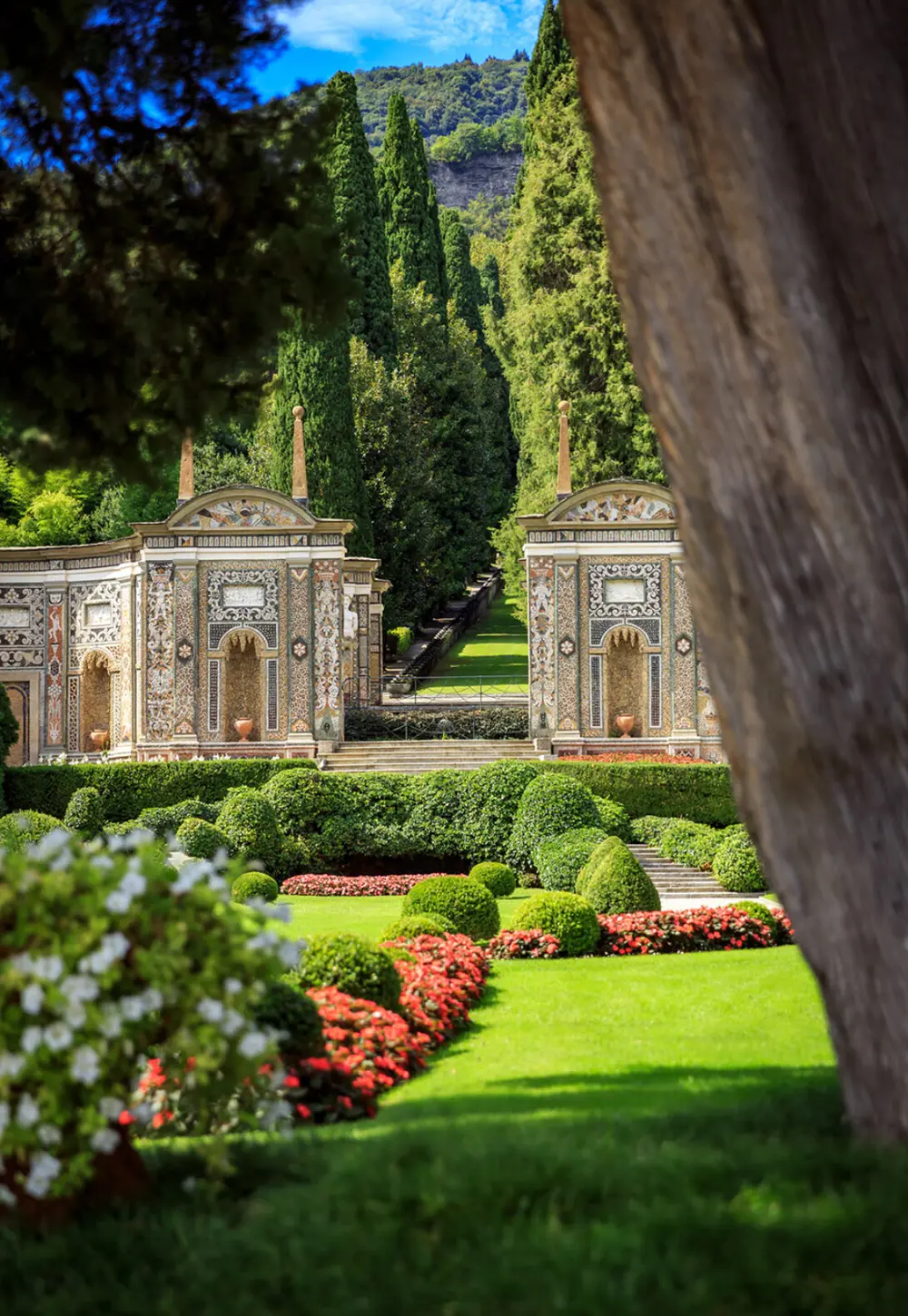
The mosaic garden and cypress avenue, Villa d’Este
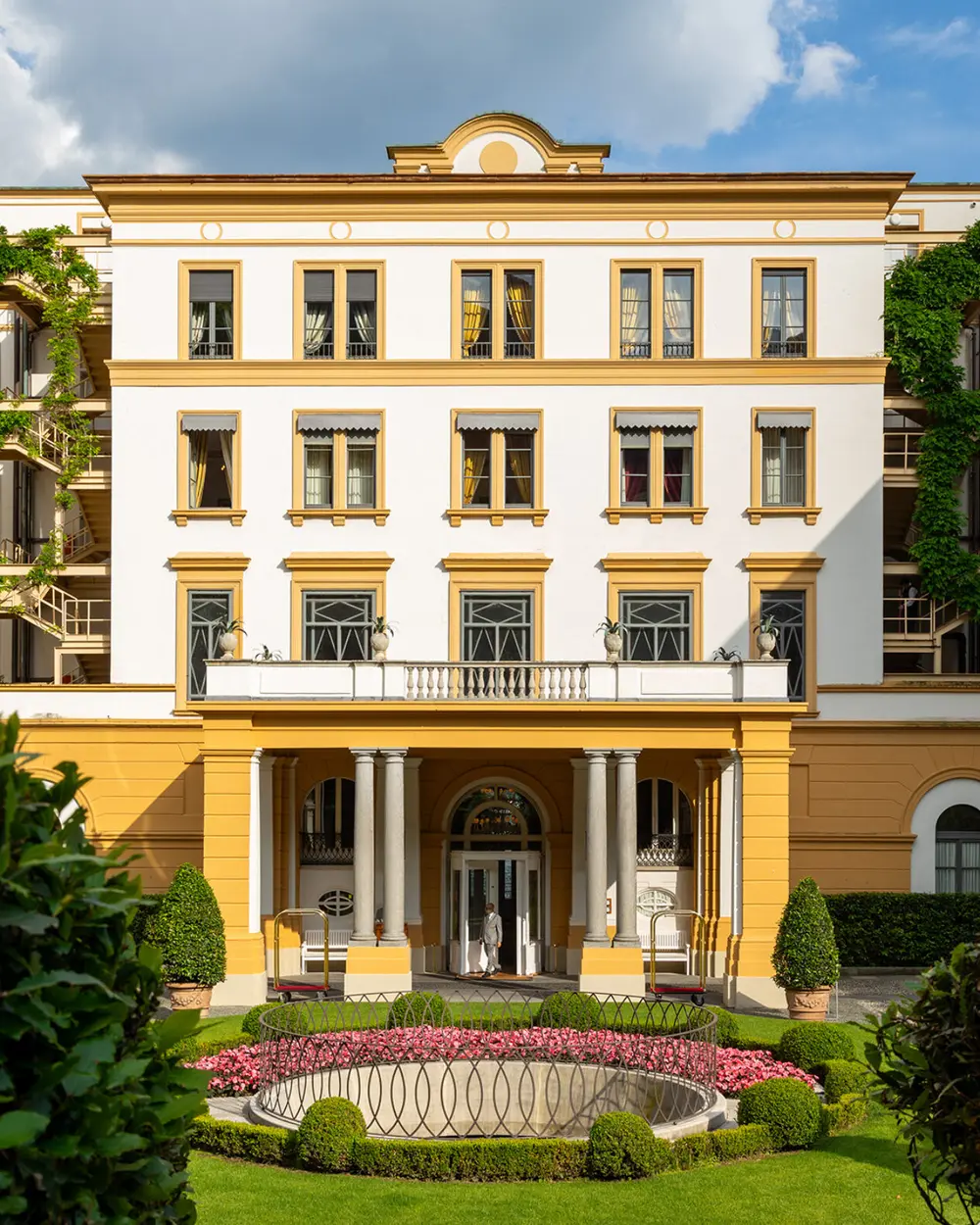
The Cardinal Building, the sixteenth-century heart, Villa d’Este
The architecture holds a discipline that resists alteration. Proportion governs everything. Windows align. Corridors extend without deviation. Surfaces carry the weight of time without appearing worn. When the storm of 2024 damaged the lakeside terraces, the response did not begin with redesign. It began with assessment. What had shifted. What had broken. What could be returned. Studio Lombardi Conservazione, under the direction of Carlo Lombardi, approached the work with a refusal to introduce anything unnecessary. The aim was not to improve the estate, but to restore its balance.
Materials were sourced from the same origins where possible. Stone replaced stone without variation. Ironwork was recast rather than substituted. The process extended beyond visual accuracy. It addressed structure. The lakeside loggia, which had absorbed the most visible damage, was rebuilt with a precision that avoids emphasis. There is no clear point at which the new begins or the old ends. The surface holds as a single line. Restoration here does not announce itself. It withdraws.
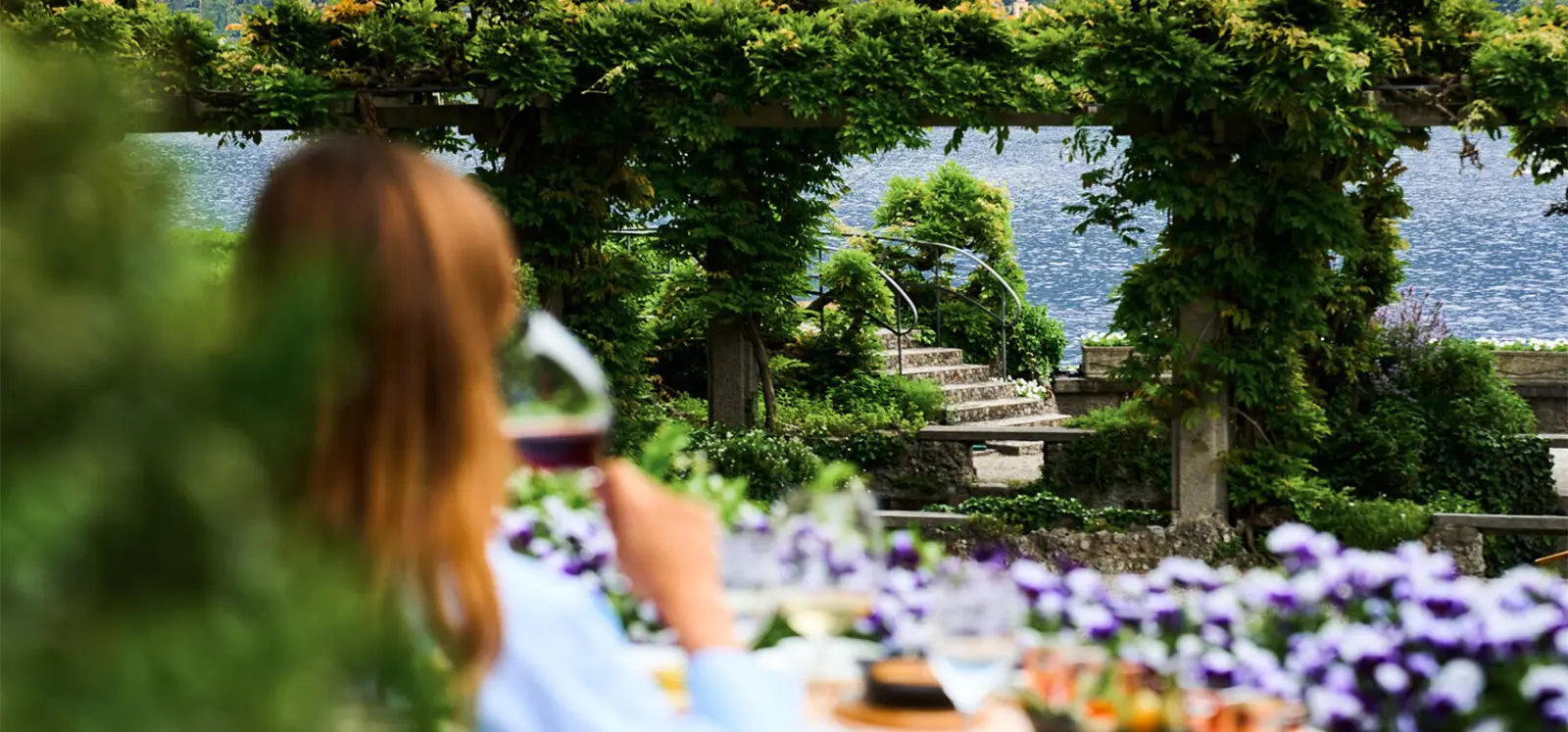
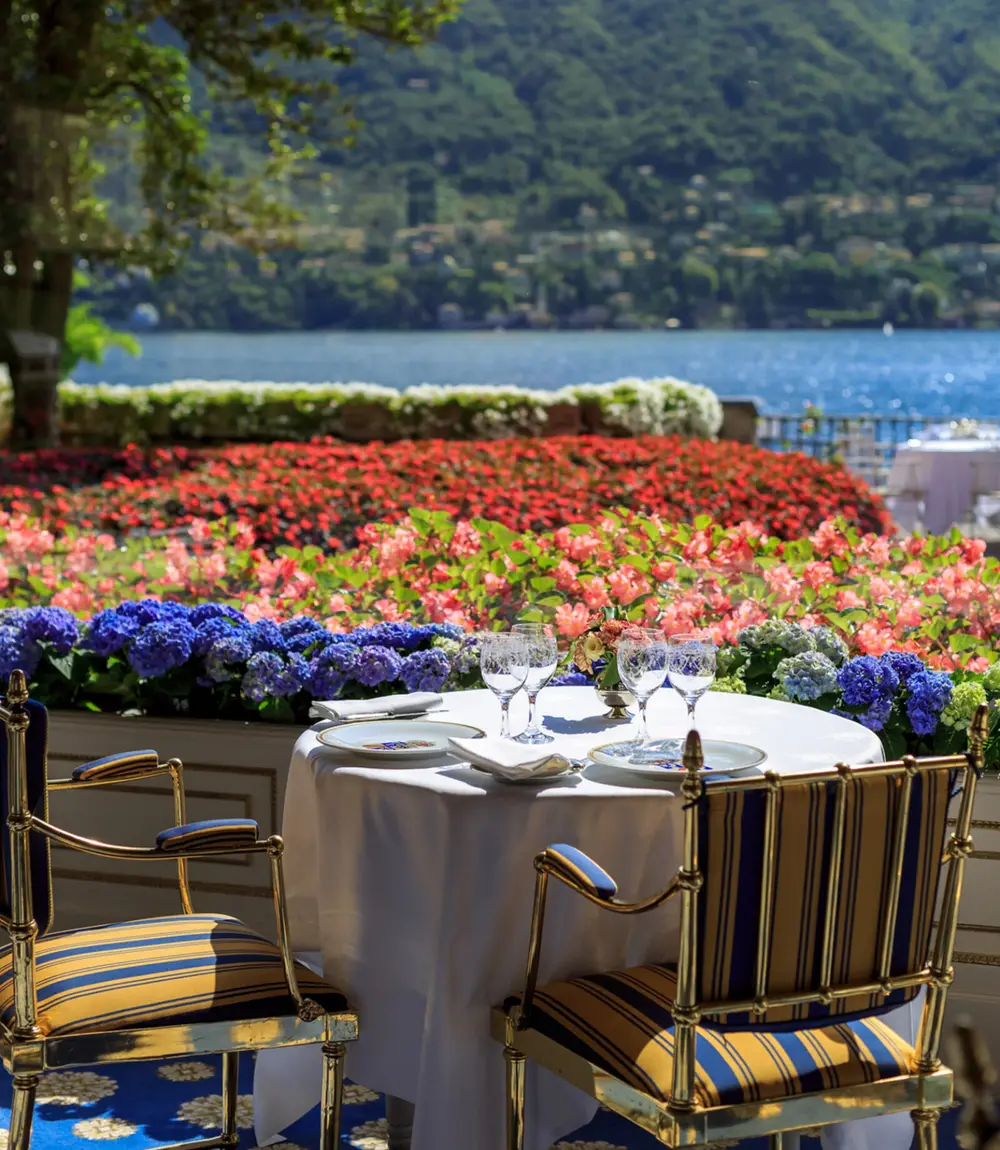
The Grill terrace over the lake, Villa d’Este
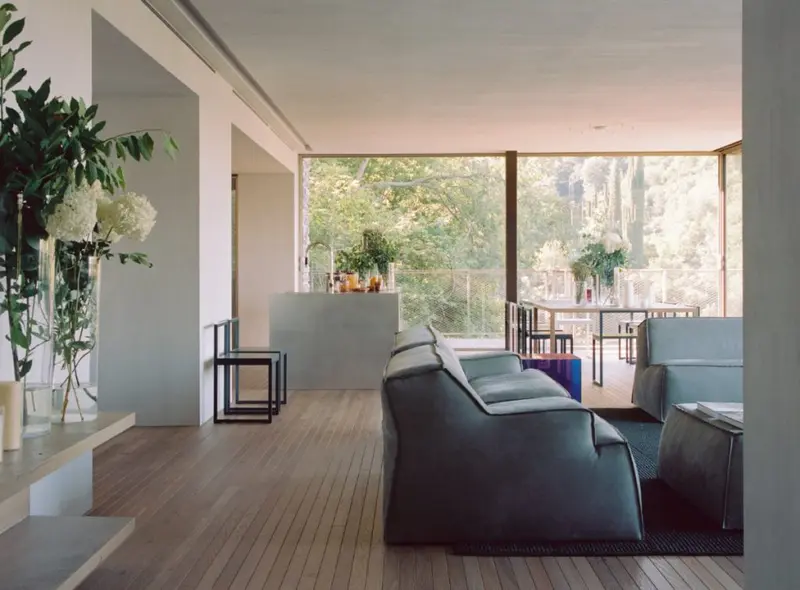
The rooms do not attempt to define the stay. They allow it to unfold. Light enters without obstruction, moving across surfaces in a way that changes throughout the day but never disrupts the space. The relationship between interior and exterior remains constant, with the lake visible but never overwhelming. Materials are used with restraint. Fabrics hold their structure. Wood retains its tone without darkening the room. Stone remains present without dominating it. There is no excess, no accumulation of detail designed to impress.
The arrangement of each space prioritises proportion. Furniture sits where it needs to sit. Nothing is added to complete an image. The room feels finished without being staged. Privacy is not constructed. It is inherent. The thickness of walls, the alignment of corridors, the distance between spaces all contribute to a sense of separation that does not need to be enforced. Staying here does not involve adjustment. The environment has already been resolved.
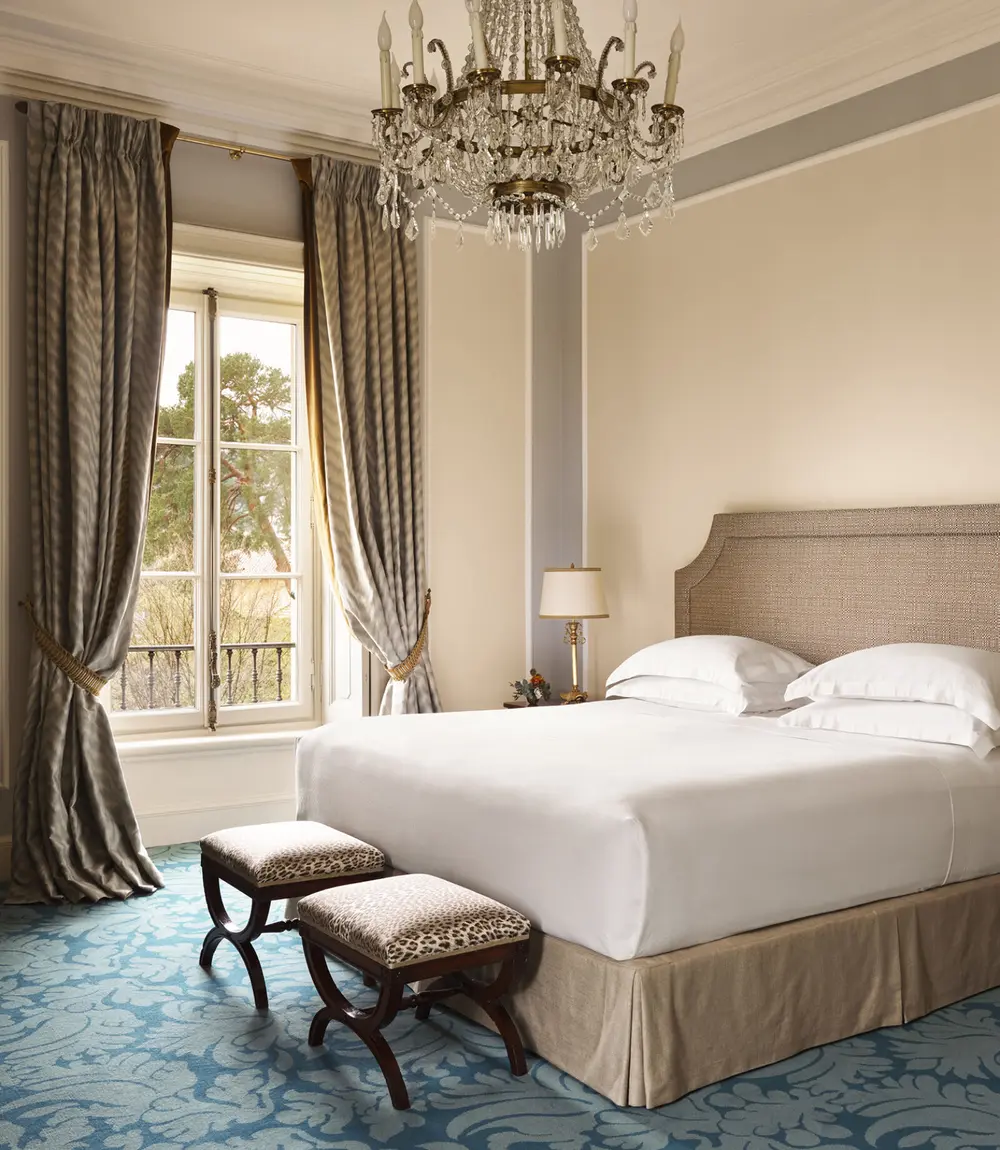
A lake-view suite, Villa d’Este
The Veranda restaurant, Villa d’Este
The dining experience follows the same principles that guide the rest of the estate. It does not seek to present itself as an event. It remains aligned with its surroundings. Under the direction of Executive Chef Michele Zambanini, the approach to food is built on restraint. Ingredients are not combined to create complexity. They are selected to hold their own. There is a clear relationship between the kitchen and the lake. Fish is not treated as a feature but as part of the structure of the menu.
One dish remains representative of this approach. Lavarello, taken from the lake, prepared without unnecessary intervention. The flesh holds intact. The seasoning is present but not pronounced. The composition relies on balance rather than contrast. The dining room does not impose atmosphere. It maintains it. Service moves without interruption, with each course arriving at the point where it is expected rather than announced.
Service at the estate operates within a framework that is not immediately visible. It is not defined by presence, but by absence. Staff move without creating interruption. Actions are completed before they are noticed. Requests do not need to be repeated. The structure is already in place. There is a level of anticipation that does not feel intrusive. It aligns with the pace of the guest rather than directing it. Time is not accelerated or delayed. It is maintained. From arrival to departure, the experience remains consistent. Guests do not adapt to the environment. The environment has already adapted to them.
Weddings at the estate are not constructed as spectacles. They are contained. The decision to hold an event here involves more than selecting a location. It involves securing the entire structure of the property. Movement, timing, and access are all controlled within a single framework. The scale reflects this approach. Smaller guest lists allow the space to function as intended. Rooms are not filled beyond their capacity. The experience remains concentrated.
Privacy is not an added feature. It is a condition. Events are not observed from the outside. They remain within the estate. The most significant element is not what is visible. It is what is removed. External variables are reduced to the point where the event exists only within its own structure. This is what defines the experience. Not access, but control.
The most expensive thing about the weekend was not what was served, where, or by whom. It was the closed-door clause.
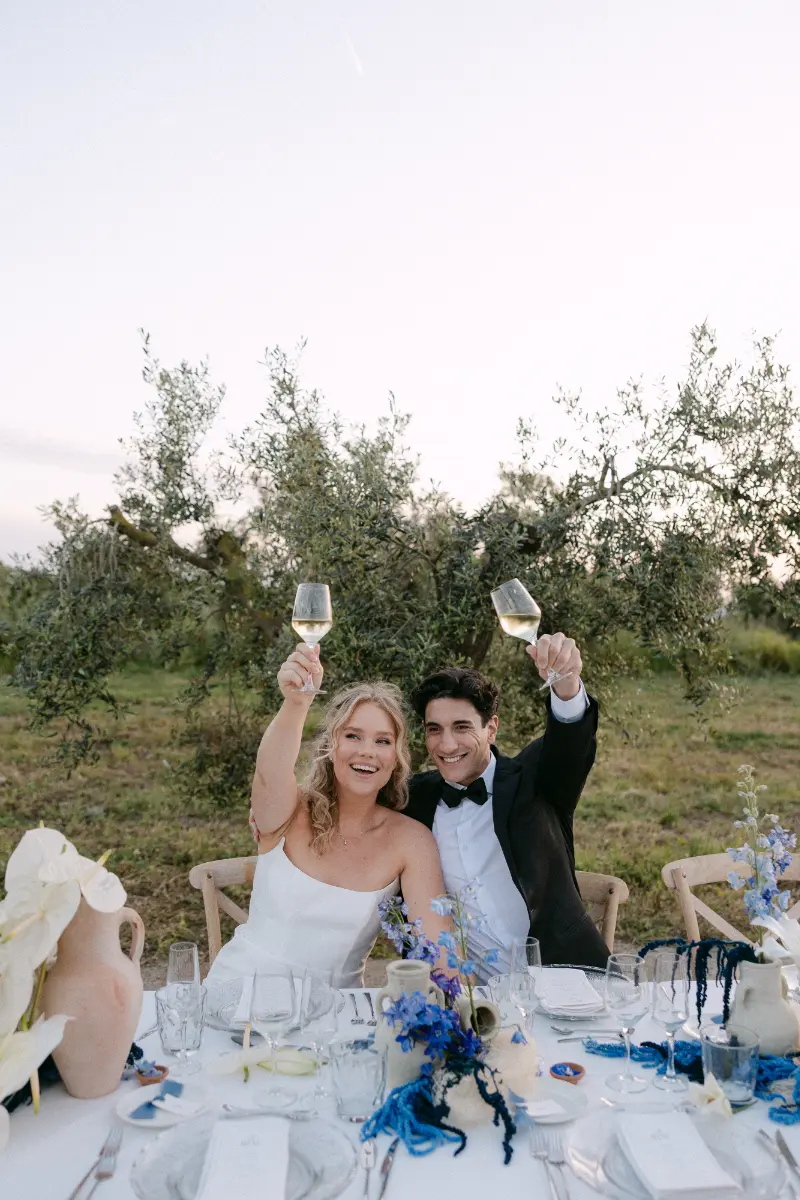
Inside Villa d’EsteThe estate does not position itself within the market. It exists alongside it. Following the restoration period, its return to private events did not rely on announcement. It relied on selection. A single event, measured and contained, was used to understand whether the balance had been restored. The general manager, who oversaw the process, spoke only once about its significance. “It mattered that it was this couple, this weekend, this room.”
In the autumn 2026 calendar, the next four available Saturdays were taken within a month. The response did not develop gradually. It arrived in concentrated form. Bookings secured without extended negotiation. Decisions made with clarity. Villa d’Este does not advertise. The wedding that reopened it did not need to. The estate’s position does not depend on visibility. It depends on continuity.
"By morning, the lake had returned to its earlier stillness. From a distance, the façade held its position once more. Nothing had changed. Everything had resumed. The doors stayed open."
Villa d’Este carries an authority few hotels can claim: more than four centuries on the same shore, a guest book that runs through royalty and Hollywood, and gardens, the famous mosaic Nymphaeum, the avenue of plane trees, that read as a stage set for a wedding without a single addition. Couples choose it for the reassurance of permanence. Nothing here is improvised; the estate has hosted significant occasions for so long that the machinery is invisible and the standard is assumed. For a certain couple, the appeal is precisely that Villa d’Este does not need them, and will not be altered by them. It offers a setting already complete, into which a wedding is received rather than installed.
Unlike a private villa taken on exclusive use, Villa d’Este is a working grand hotel, so a truly private wedding means securing the estate, or a clearly defined part of it, rather than simply booking a room and a terrace. That changes the scale of the commitment and the conversation: the most exclusive celebrations involve a substantial buy-out, and the property is selective about the events it takes. Demand is concentrated around the temperate months, and the best Saturdays in the spring and autumn shoulders are claimed a long way ahead. As with any hotel of this stature, weddings are arranged directly with the estate’s events team, and couples should treat published impressions as a starting point only, capacities, available dates and terms are confirmed property-side. The reward for that formality is a celebration held to a standard the estate has spent four hundred years refining.
Villa d’Este is a grand hotel of singular history, taken in full only by the rare wedding that secures the whole estate. For couples drawn to its discipline but planning a celebration of their own, the lake holds private villas in the same spirit. Villa Nascosta sits low on the western shore at Como, a lakefront house with a private jetty available for exclusive-use weekends; Villa Sofia, in the hills above Lecco, sets its ceremonies beneath a garden pergola with the mountains behind.
- Lakefront exclusive-use villa
- Garden villa above Lecco
For a portrait of a wedding on the lake as it actually unfolds, read Beatrice & Marco: A Lake Como Love Story. For the lake’s most cinematic private villa, read Inside Villa del Balbianello.
The editorial team at Luxury Wedding Directory, profiling the world's finest wedding venues and creatives.