To reach Kasbah des Caïds you drive south from Marrakech over the High Atlas, up through the switchbacks of the Tizi n'Tichka pass and down the far side into another Morocco entirely: drier, older, emptier, the land turning the colour of ochre and the towns giving way to palm oasis and mud-brick kasbah. Four hours in, near the town of Agdz, the Drâa Valley opens out, and in the oasis of Tamnougalt stands a 16th-century fortress that is now one of the most extraordinary places in the country to marry.
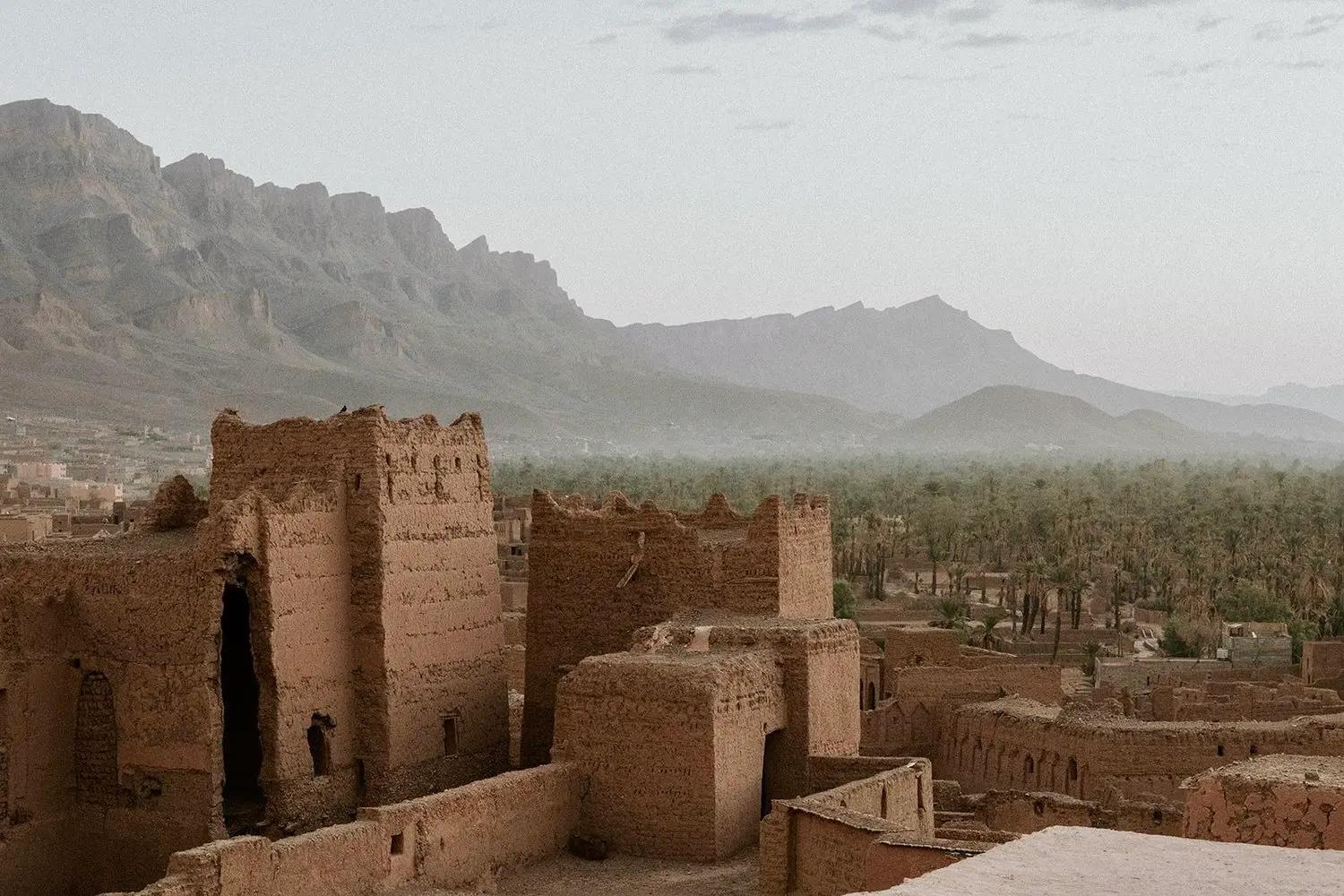
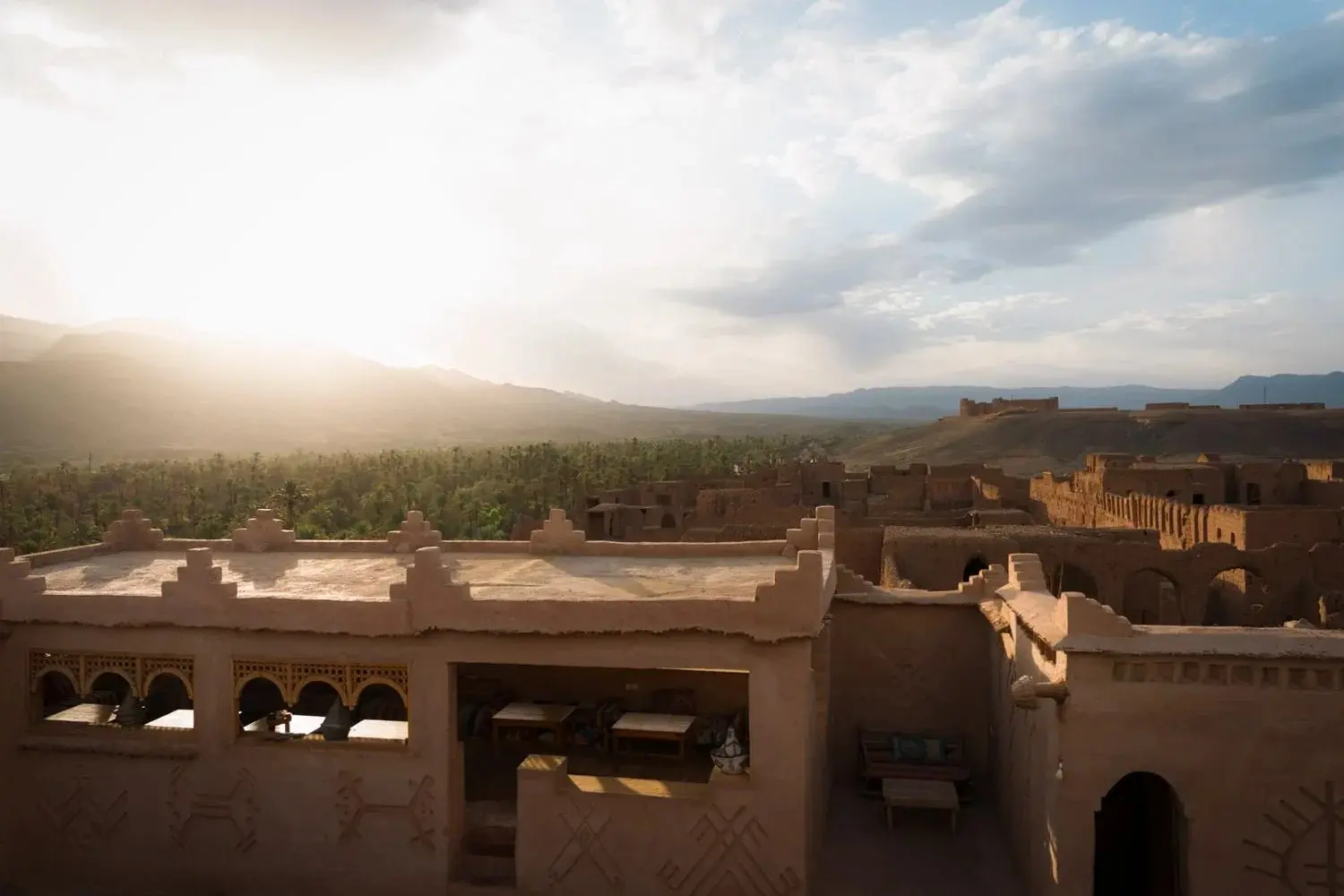
The fortress in the Drâa Valley, beneath the mountains
The Drâa is Morocco's longest river, and its valley is a green thread stitched through the desert, a ribbon of date palms running south from Ouarzazate toward the dunes of M'Hamid and the Sahara beyond. On either side rise bare, folded mountains; in the middle runs the water, and along the water stand the kasbahs, the fortified earthen villages that once guarded the caravan routes carrying gold, salt and enslaved people up from the south. Tamnougalt was the seat of the caïds who governed the whole Mezguita, and Kasbah des Caïds was their fortress.
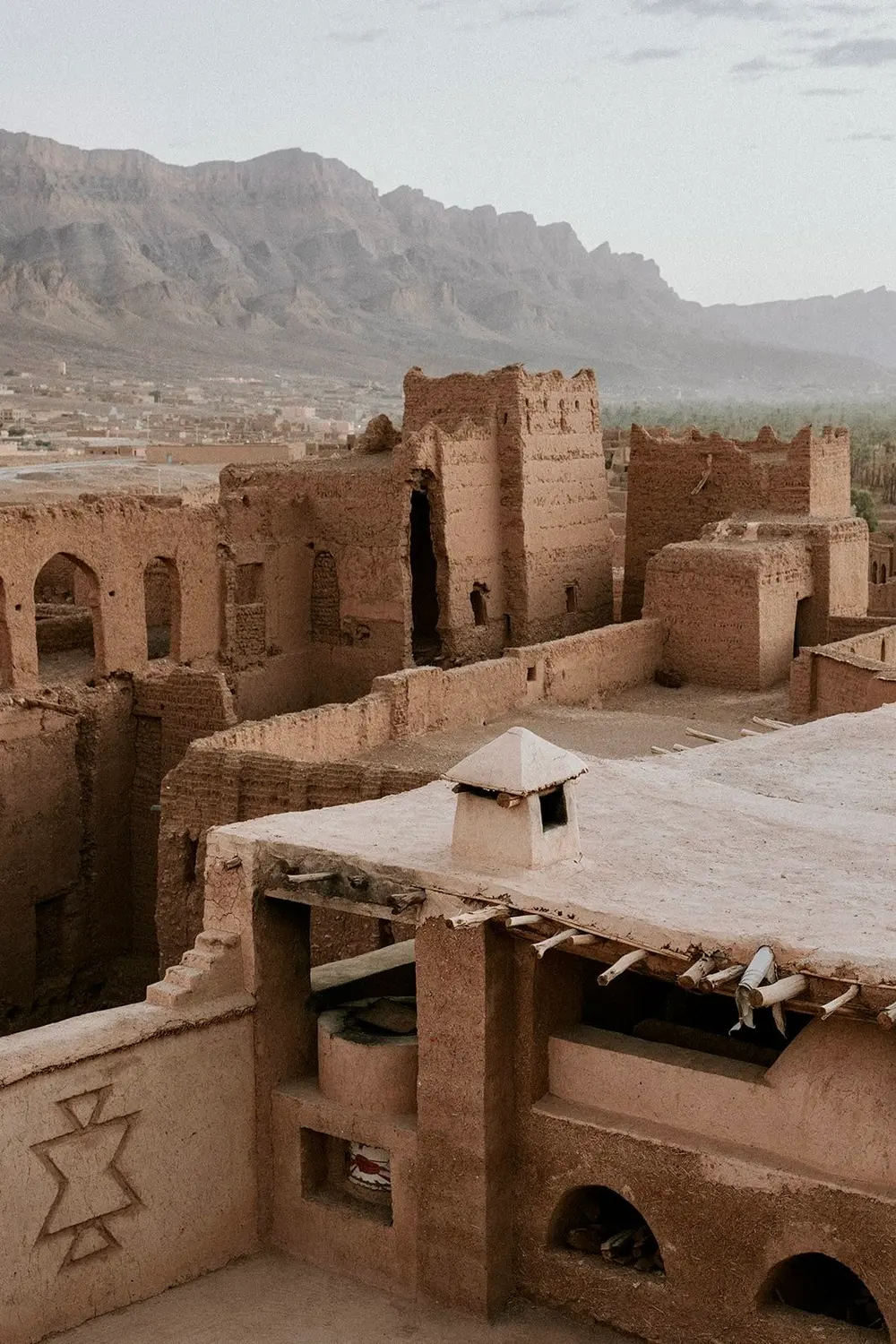
It is a building of rammed earth and mud brick, five hundred years old, its walls a metre thick and the colour of the ground it stands on. Inside, it is a warren of courtyards and stairs and shaded rooms: carved-cedar doors, tadelakt plaster polished to a sheen, painted ceilings, keyhole arches, and a rooftop that opens without warning onto a 360-degree view of the valley, the palms and the mountains. The OSUN Collection has restored it as a heritage sanctuary, keeping the earthen bones and the old craft while making it fit to sleep and to celebrate in.
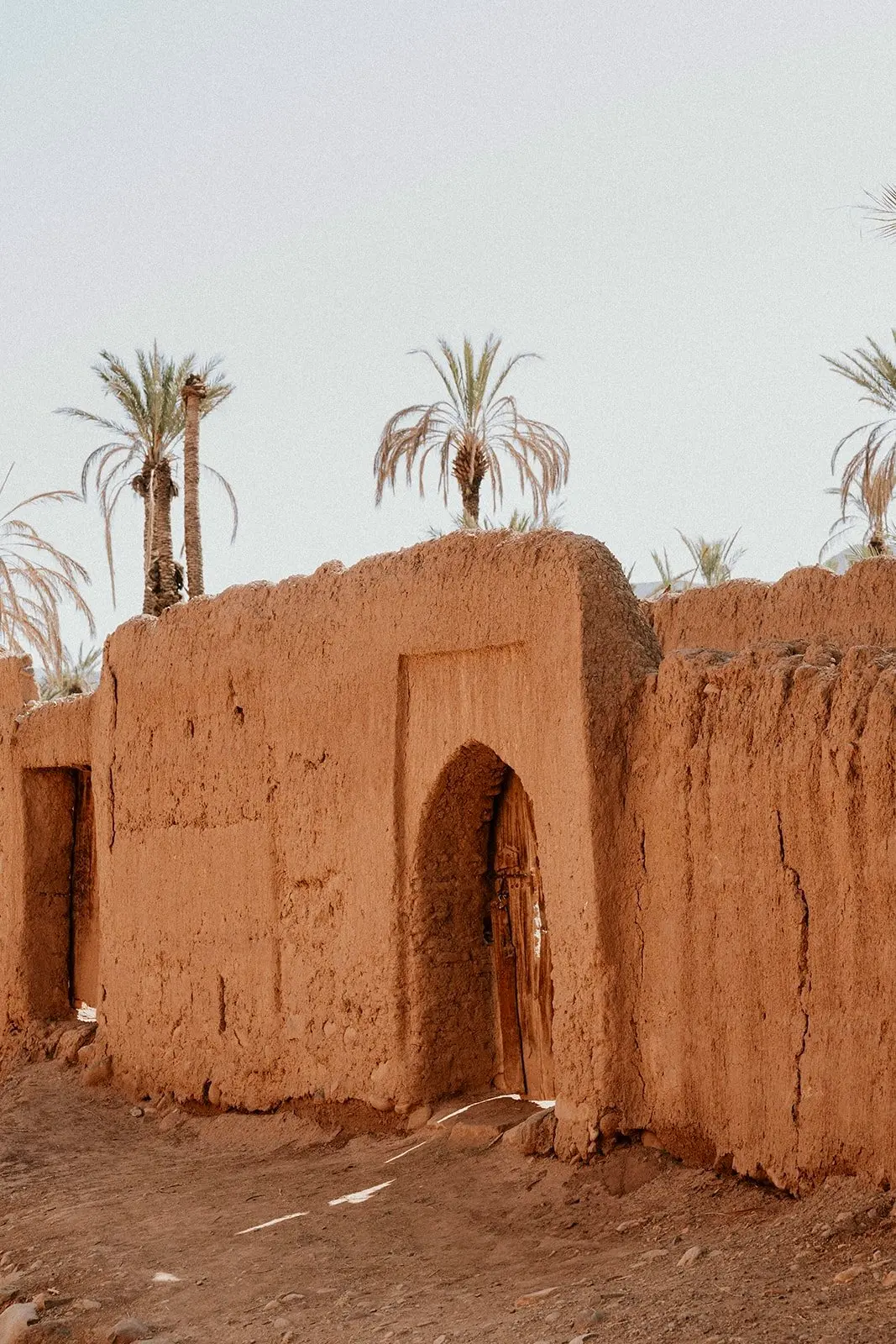
The earthen walls among the date palms
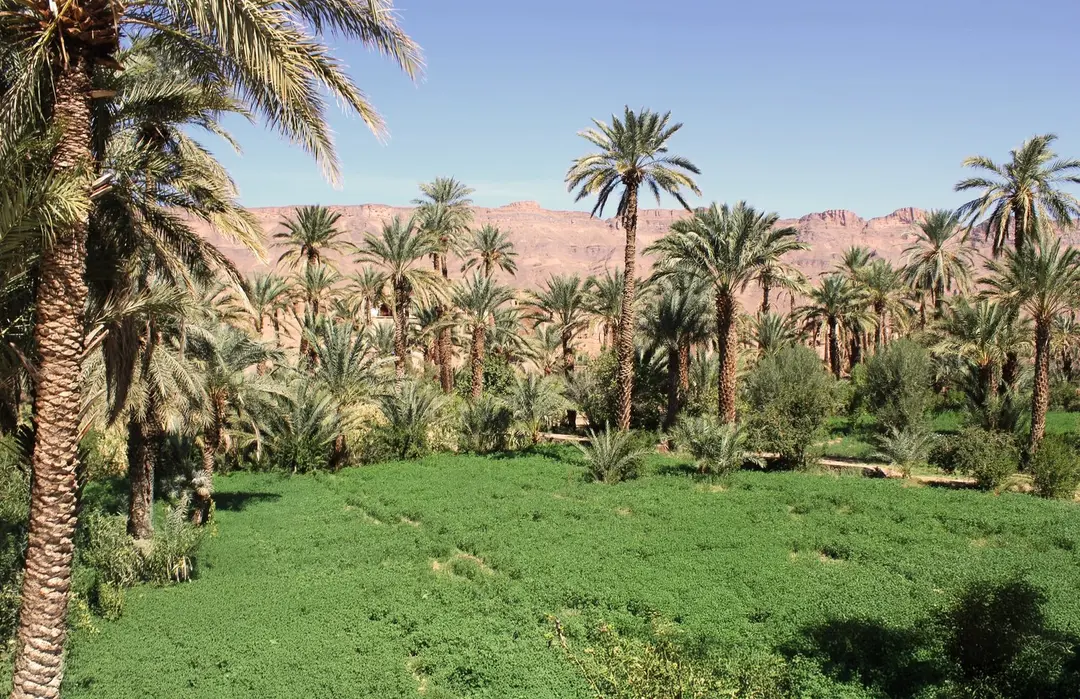
The green oasis and the mountains beyond
A wedding takes the whole kasbah. This is exclusive use in its truest sense: there is no other party, no other guests, nothing but your own people within the walls, and the village and the oasis and the desert beyond. Celebrations run from a two-person elopement to as many as 200 guests, and the scale of the place absorbs both, an intimate ceremony on the rooftop at dawn, or a feast for two hundred filling the courtyards after dark.
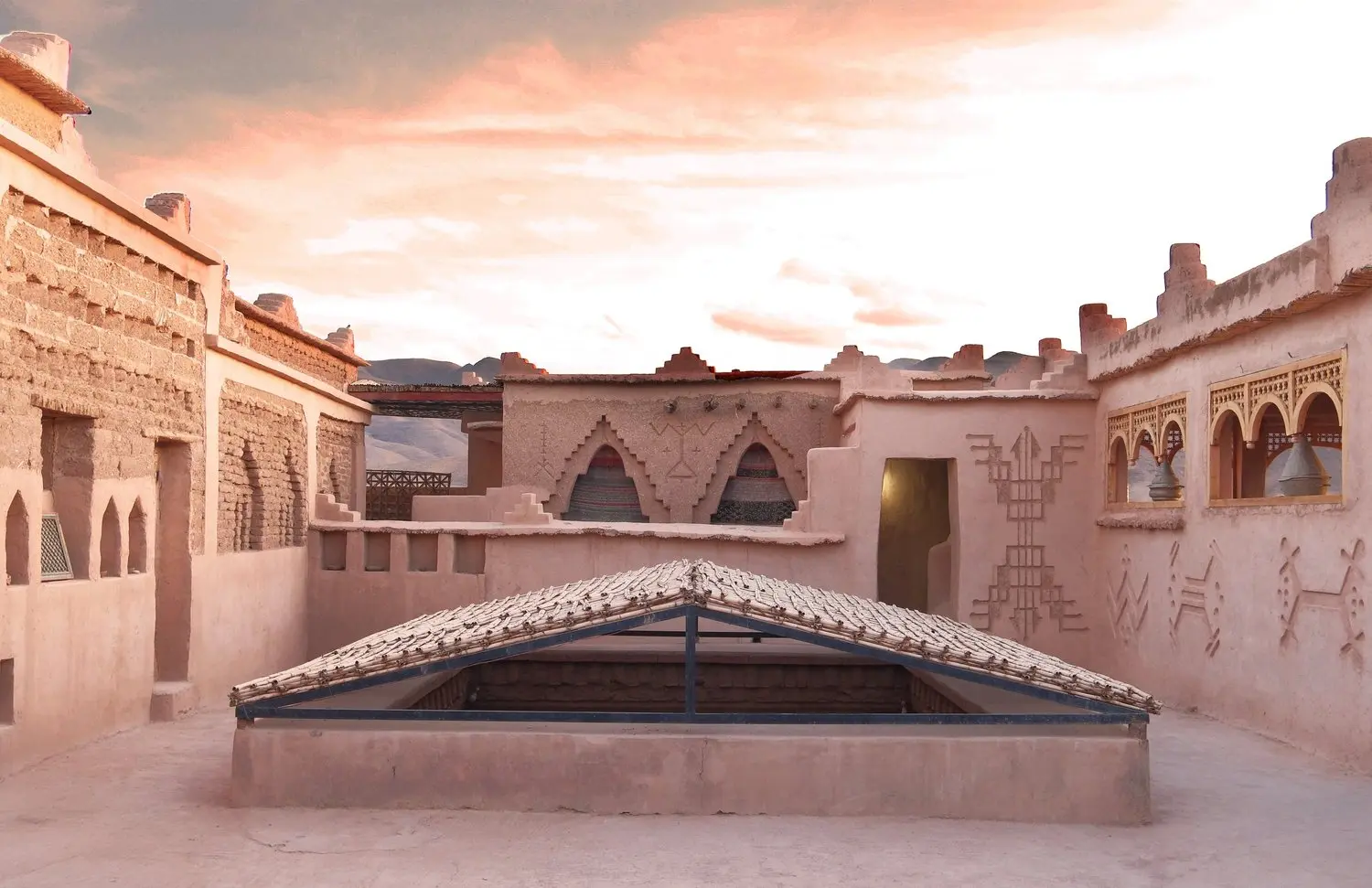
The glass-roofed courtyard, set for a celebration
There are three settings for the vows, and couples often use more than one across a wedding. The first is the oasis garden, down by the river below the fortress, a green room of date palms and running water where a ceremony feels held by the landscape itself. The second is the rooftop, high on the kasbah, where the whole Drâa Valley falls away on every side and the light at either end of the day turns the mountains to fire. The third is the inner courtyards, within the walls, cool and shaded, their arches and carved galleries a thousand years of craft as the backdrop.
The remoteness is not a drawback; it is the point. Most Moroccan weddings happen in Marrakech, in a riad or a palmeraie a taxi-ride from the airport. Kasbah des Caïds is four hours further on, and that journey, over the Atlas and down into the desert, changes the whole character of the wedding. Guests arrive having travelled somewhere, together, to a place they will almost certainly never have been. The wedding stops being an event you attend and becomes an expedition you take, which is exactly what the best destination weddings manage to be.
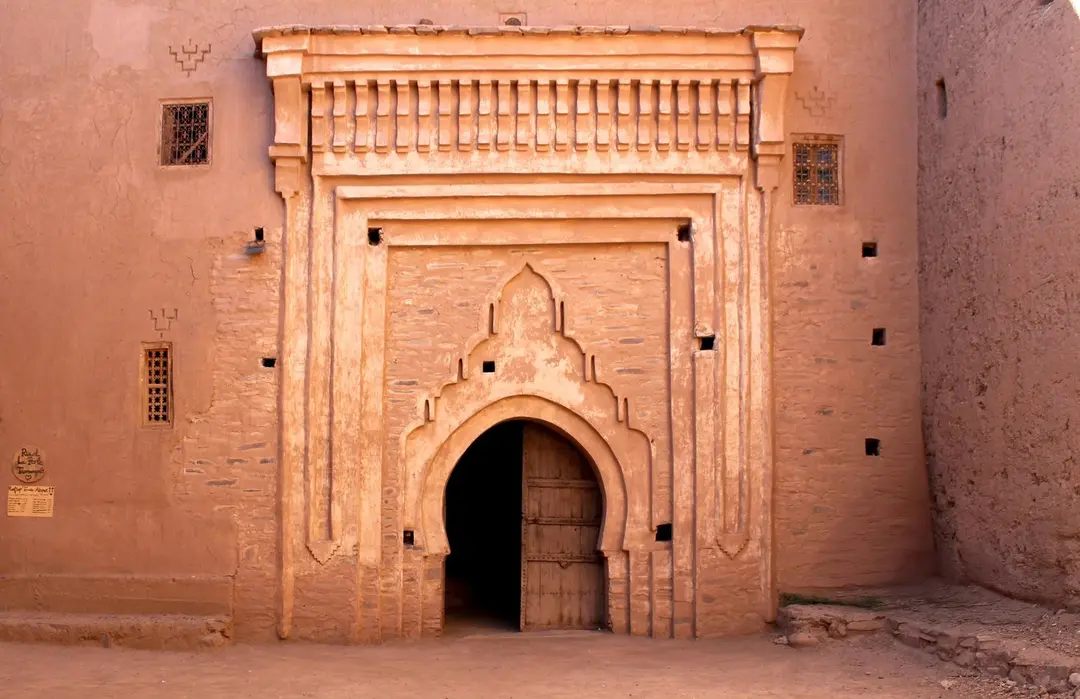
The carved gate of the fortress
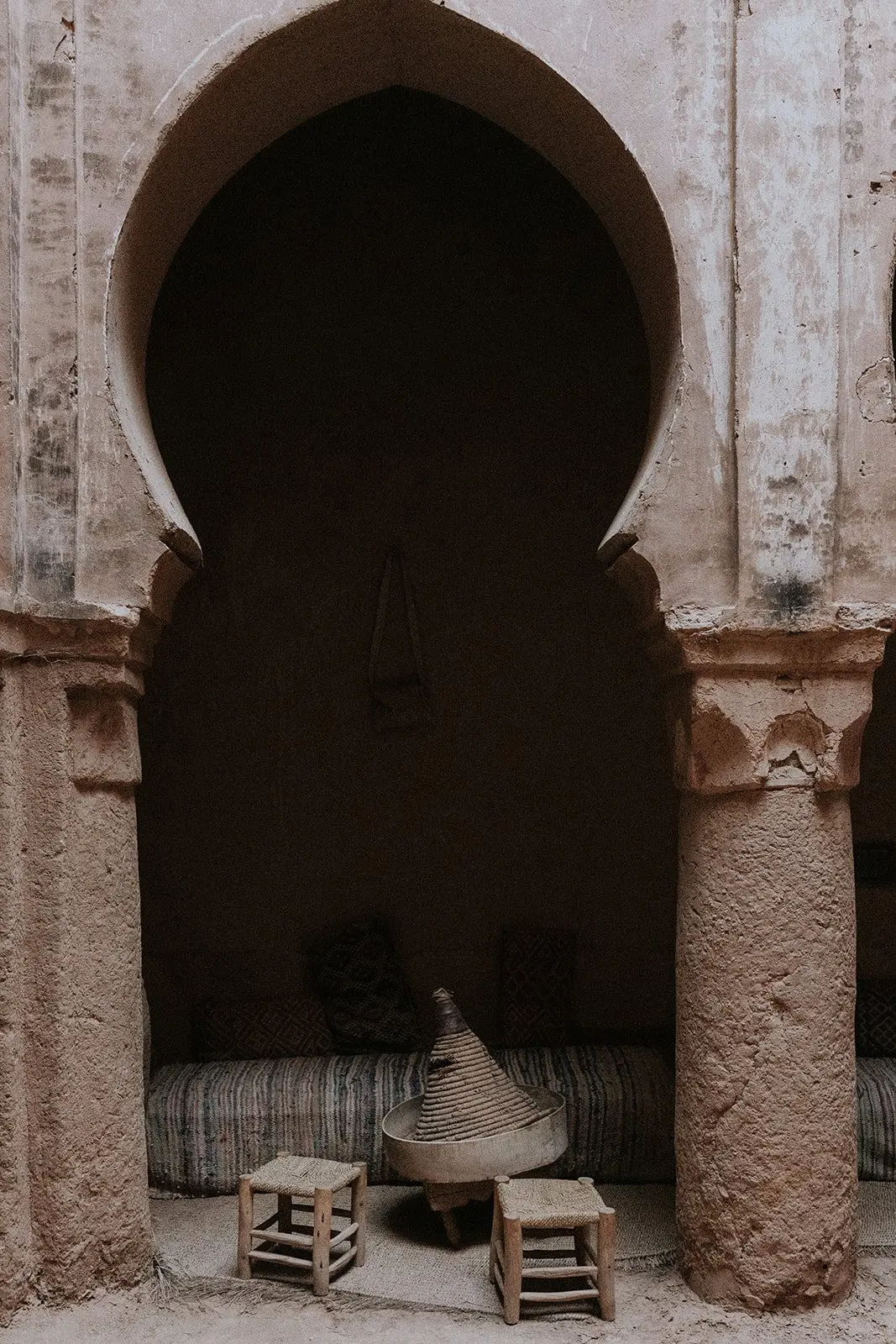
A keyhole arch and a lantern-lit doorway
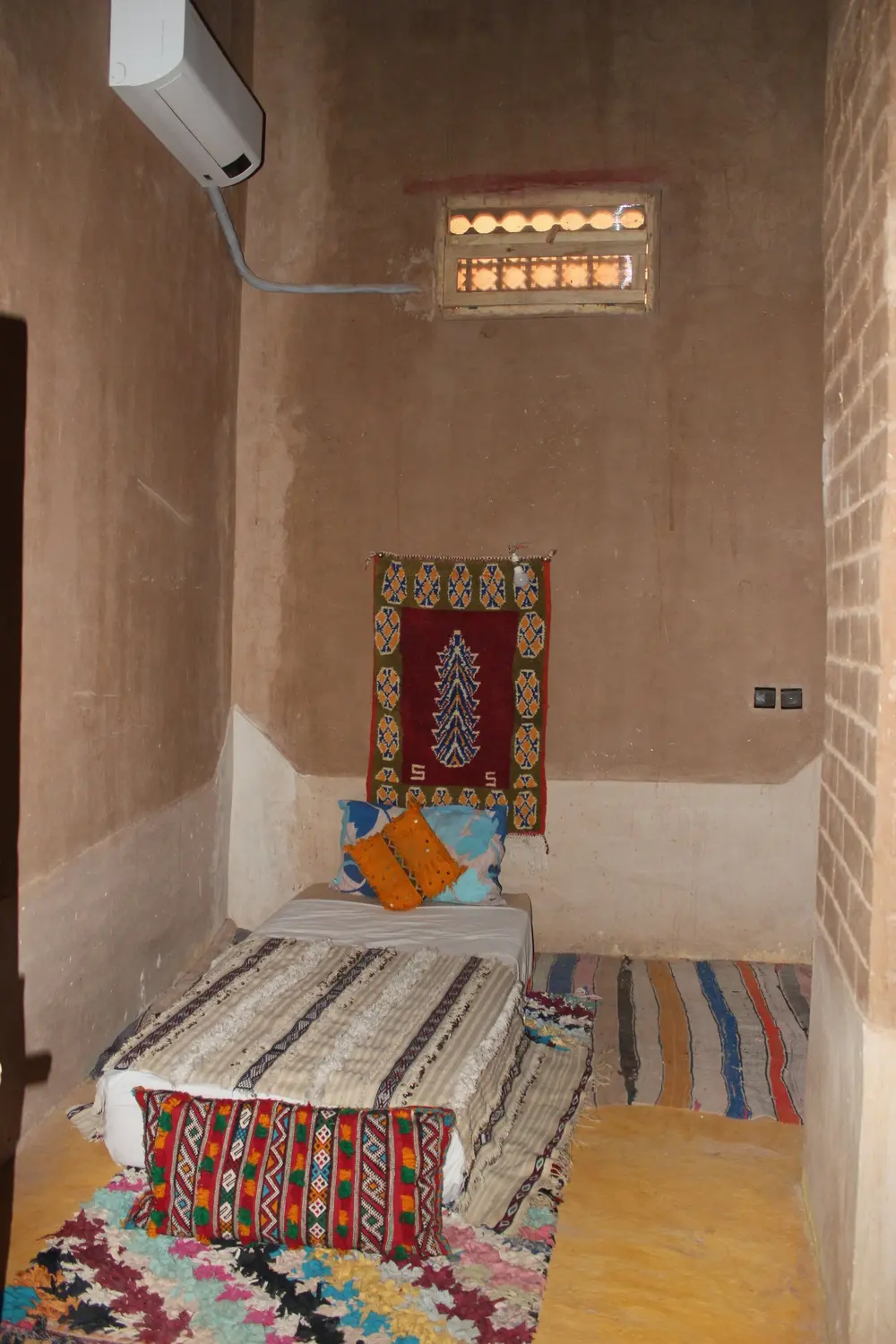
Because it is a fortress with rooms, a wedding here runs across several days as a matter of course. Ten boutique rooms lie within the walls, no two alike: the grand, tall-ceilinged Museum Room off the museum courtyard; rooms in ochre and white with tadelakt plaster and Berber textiles; beds set beneath canopies and arches, cool behind the thick earthen walls even when the sun is high. The wedding party takes these, and further guests stay in Agdz, ten minutes down the valley, or in Ouarzazate, an hour on.
"A palm oasis, a citadel of earth, and the silence of the desert just beyond the walls."
, On Kasbah des Caïds
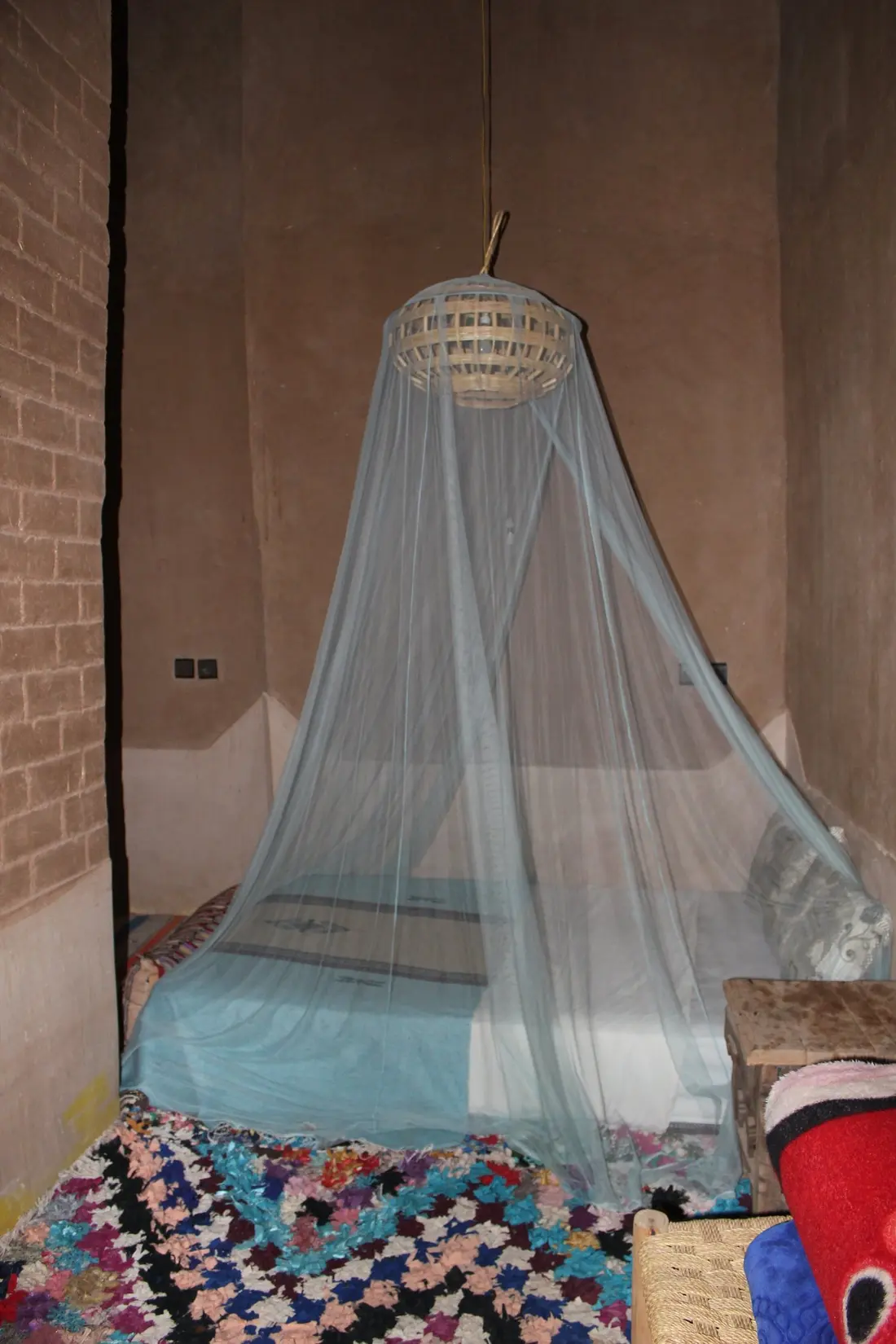
A bed beneath a canopy, behind rammed-earth walls
The food is of the south, and the kasbah leans into it rather than dressing it up. The venue is offered on a hire basis, with couples bringing in their own caterer, and the cooking that suits the place is Moroccan and Berber: tagines slow-cooked over coals, grilled meats, salads and warm breads, dates from the surrounding oasis, and mint tea poured from a height into small glasses in the courtyard. Dinners are laid in the inner courtyards or on the rooftop under a sky thick with stars, and the meal becomes part of the theatre of the place.
The kasbah's own traditions fill the days around the wedding. There is a hammam within the walls; a cooking lesson in Berber dishes; bread baked in the old ovens; a henna evening for the couple and their party; and gnaoua musicians, whose hypnotic drumming and iron castanets are one of the great sounds of southern Morocco, playing in the restored upper rooms as the desert night comes down. An in-house museum tells the story of the caïds and the caravans, and guided walks lead out into the oasis and the old village of Tamnougalt.
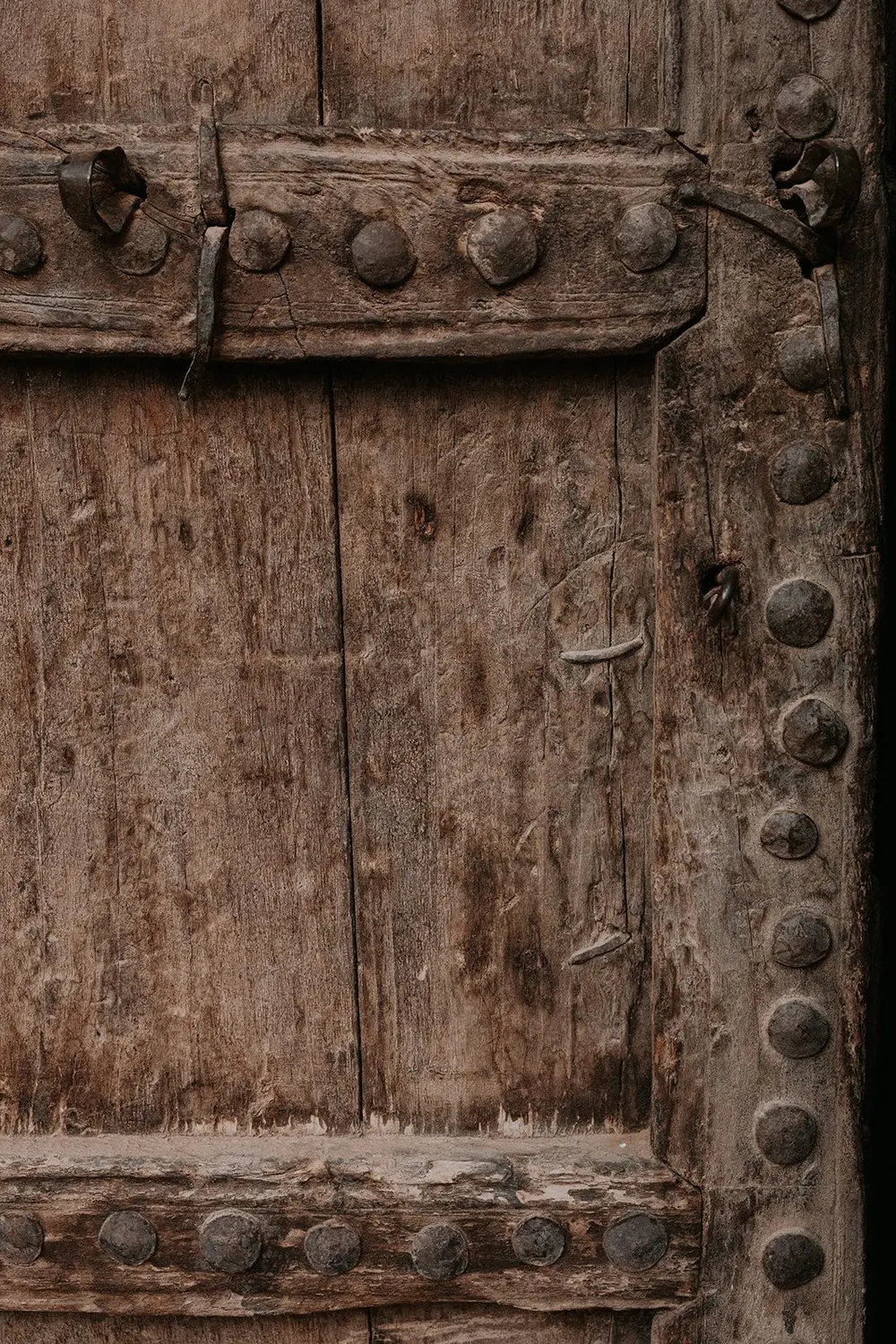
A carved cedar door
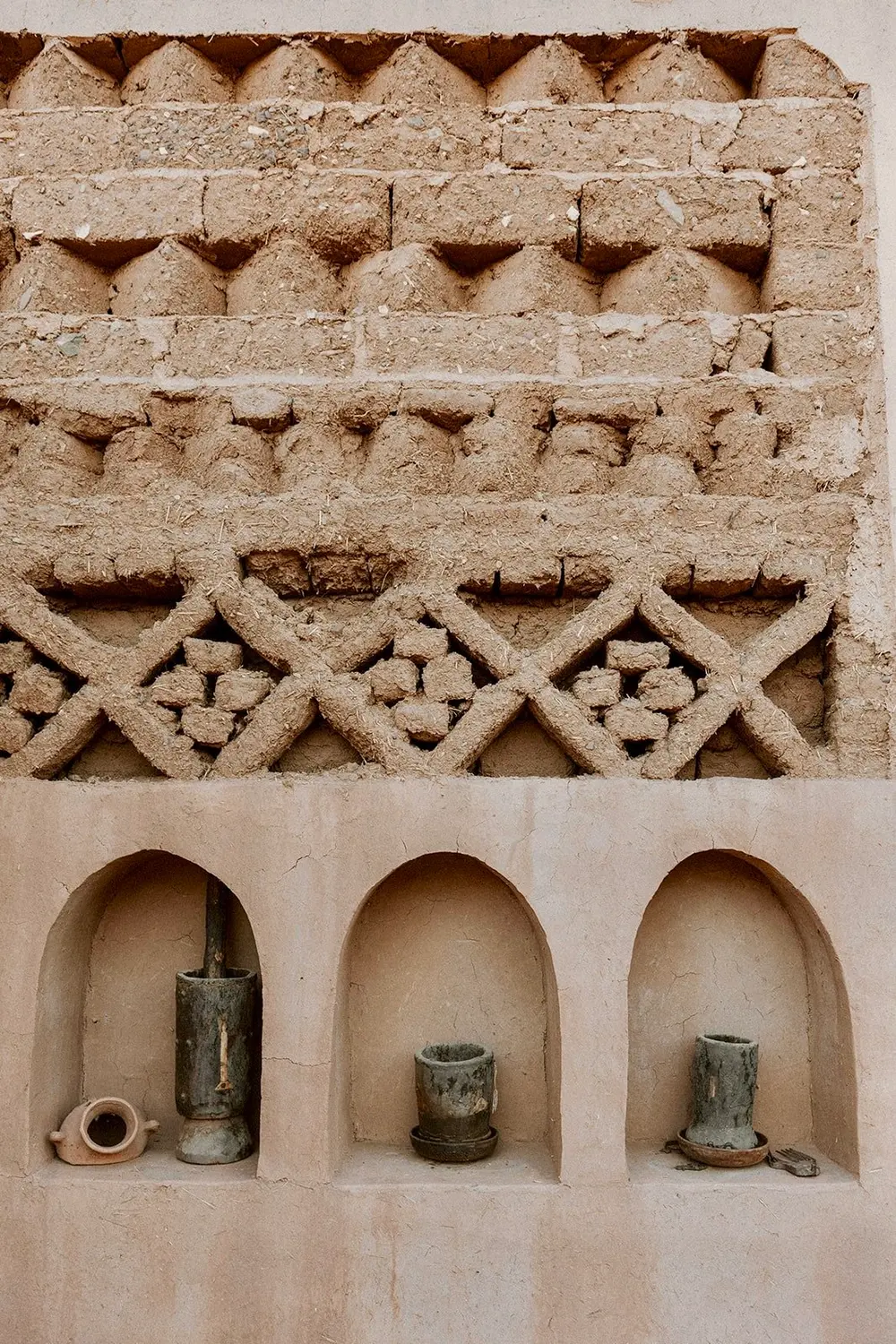
Carved plaster niches
The landscape does much of the work. In the early morning, before the heat, the light comes up over the mountains and the oasis below the kasbah fills with birdsong and the first smoke of cooking fires. In the evening, the whole valley turns gold and then rose and then a deep blue, and the stars come out with a clarity you only get at the edge of the desert. A couple standing on the rooftop at either of those hours needs very little else; the place is already doing everything.
It suits a particular couple: one drawn to landscape and history over polish, who would rather marry in a five-hundred-year-old fortress at the edge of the Sahara than in a hotel ballroom, and who understands that the journey and the remoteness are part of the gift rather than an inconvenience. For them, few wedding venues anywhere offer a landscape and a history this uncompromising, a wedding their guests will still be describing years later, having crossed the Atlas to reach it.
A Wedding at Kasbah des Caïds
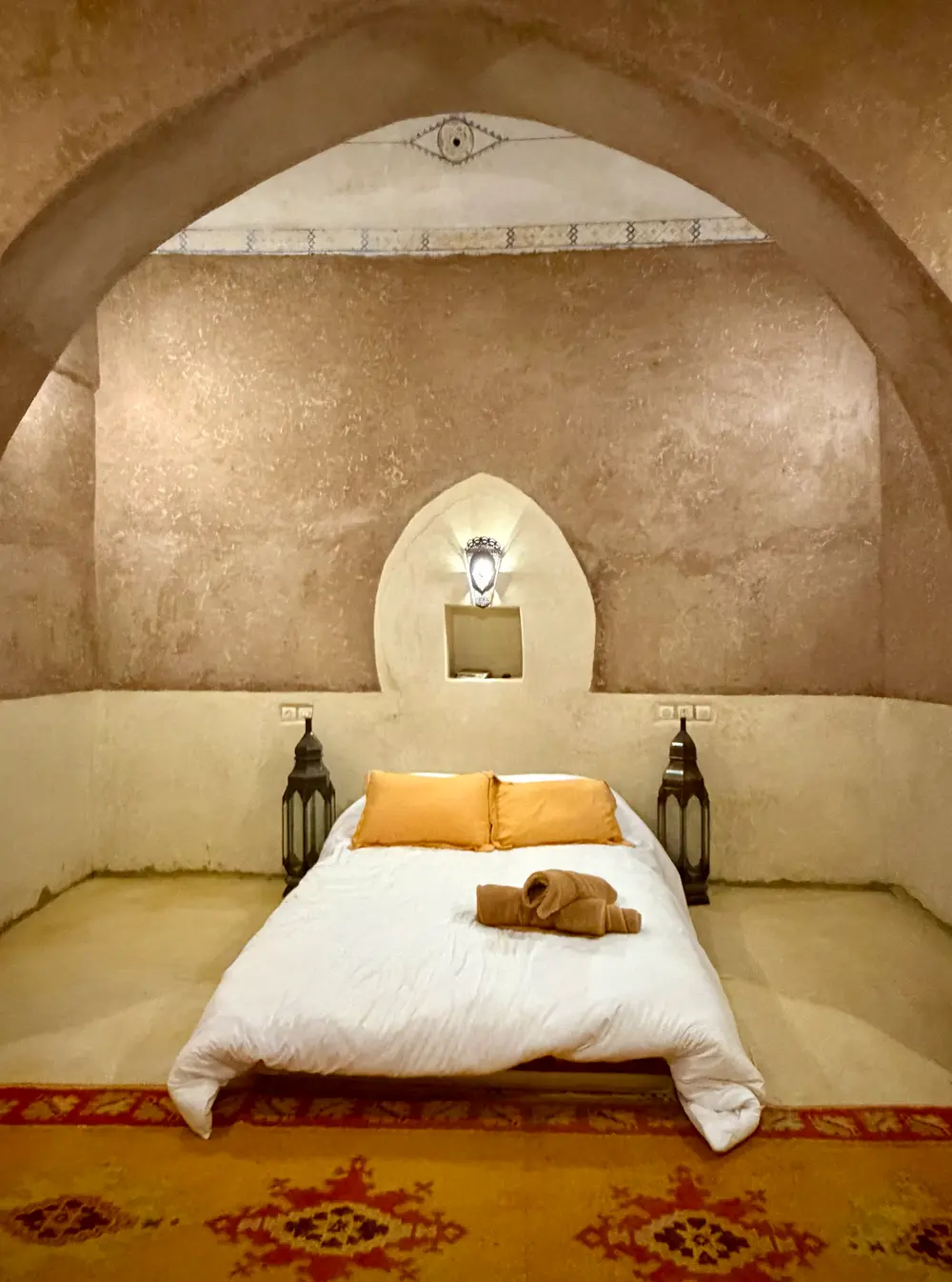
The Museum Room, with its great arch
The rooftop terrace at sunrise, over the kasbah
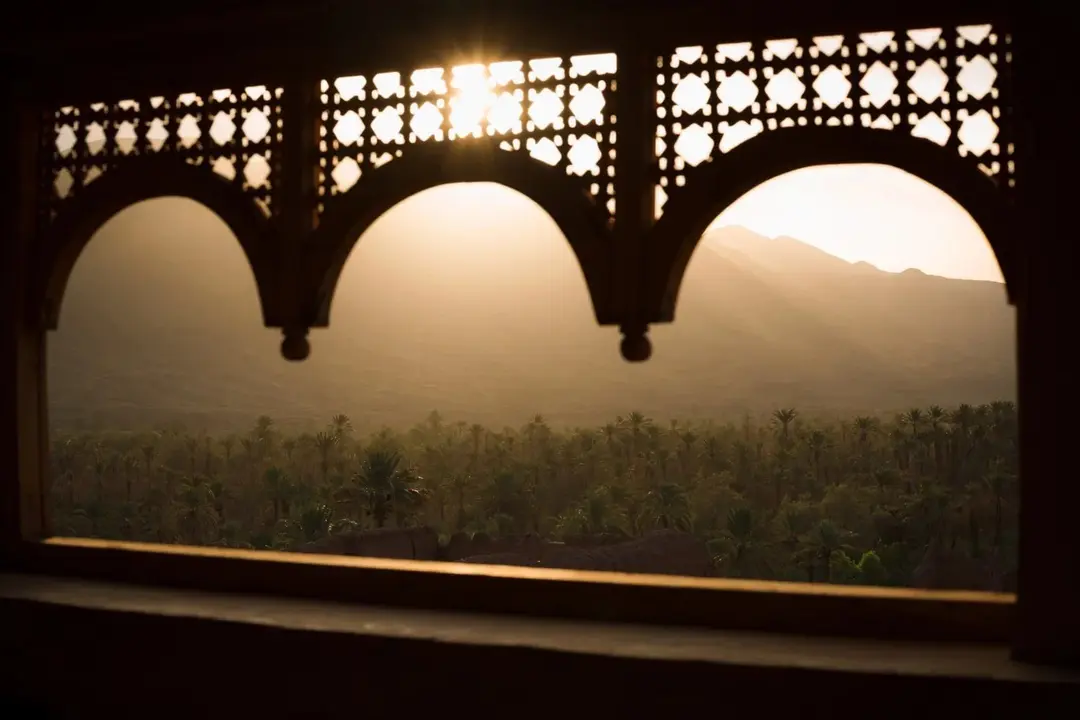
The rooftop, over the palm oasis at dusk
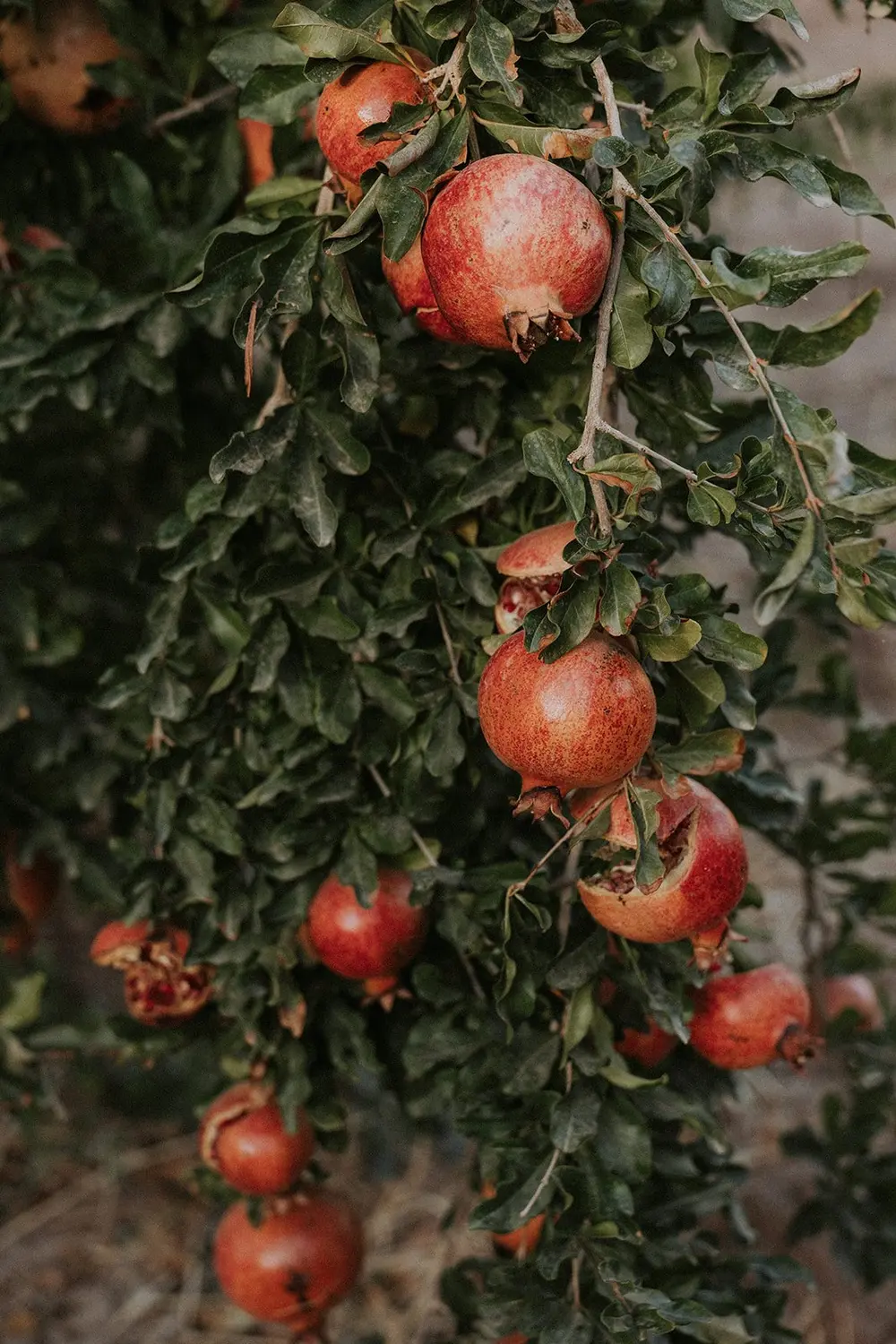
Pomegranates in the garden
A sitting room, dressed with Berber rugs
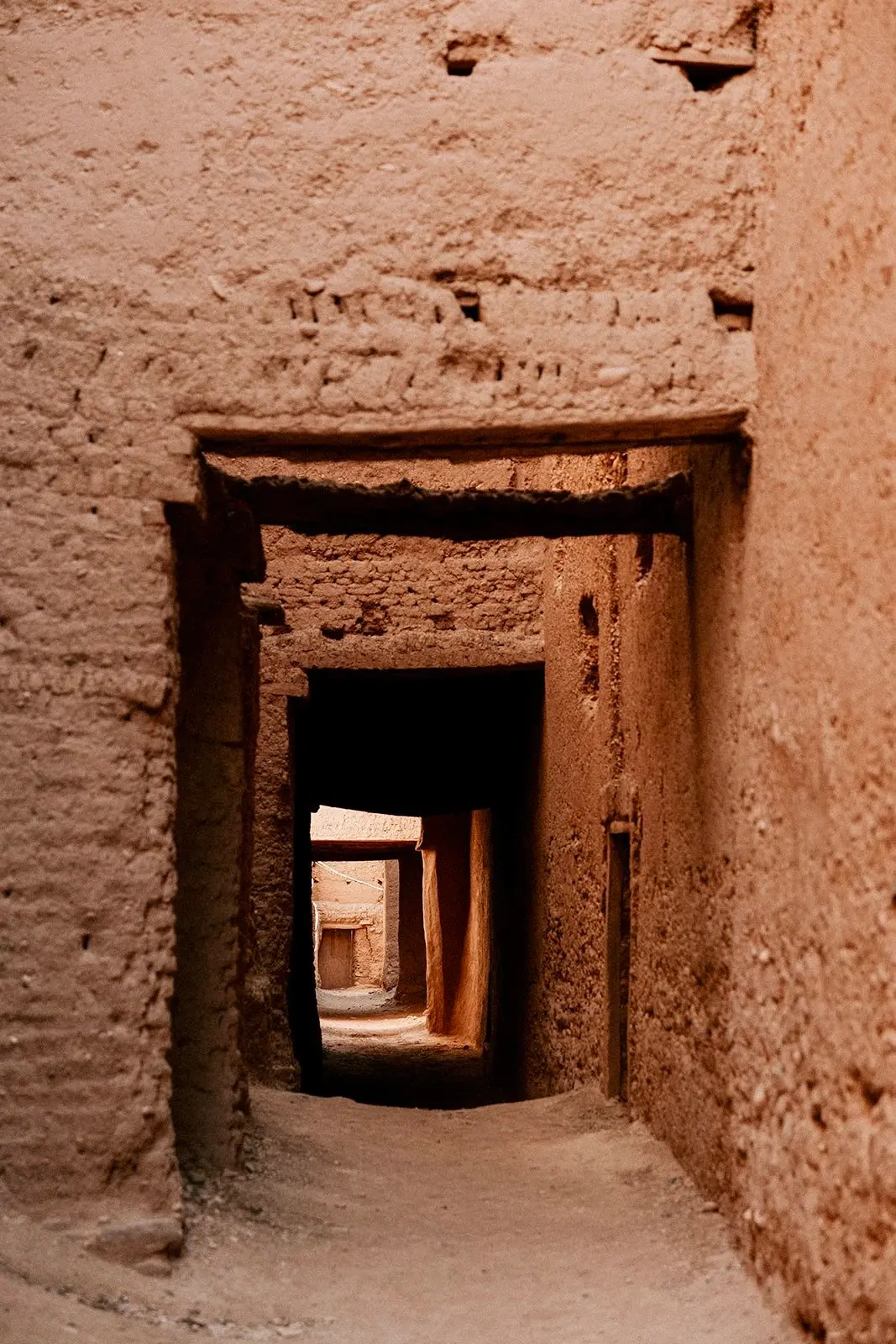
A corridor through the fortress
For couples who want their wedding to feel like the beginning of an adventure, in a landscape and a building almost no other venue can match, Kasbah des Caïds is the Drâa Valley's most remarkable wedding address: a 16th-century fortress in a palm oasis, taken whole, between the High Atlas and the Sahara. Venue hire is from EUR5,000 on exclusive use, with catering and rooms arranged around your plans; the LWD team makes the introduction and helps you request a proposal.
- Venue
- Kasbah des Caïds, Tamnougalt, Drâa Valley, Morocco
- Images
- Courtesy of Kasbah des Caïds, OSUN Collection
The editorial team at Luxury Wedding Directory, profiling the world's finest wedding venues and creatives.
Kasbah des Caïds · Enquire
Enquire with Kasbah des Caïds
Send an enquiry and our wedding team will connect you with the venue.